Taking your children to see wild animals in a zoo remains one of the most memorable family outings. Not all zoos in France offer the same experience: some focus on immersion in recreated habitats, others on the conservation of endangered species, and still others on unusual accommodations amidst the enclosures. Choosing the right park depends on the age of the children, the time available, and what you are really looking to experience.
Conservation Programs: What Distinguishes a Committed Zoo from a Simple Animal Park
A zoo can showcase hundreds of species without participating in any preservation program. The difference lies in one specific point: membership in the European EEP programs coordinated by EAZA. These programs plan births to maintain genetic diversity in captive populations and avoid inbreeding.
Some parks go further by supporting reintroductions into the wild. The Przewalski’s horse and the European bison are two concrete examples, with individuals born in captivity released into reserves. At ZooParc de Beauval, biodiversity protection also involves an endowment fund that finances projects on the ground.
Before planning your visit, you can explore wildlife with Poupala to locate parks near you and compare their specific features.
The Safari de Peaugres organizes events dedicated to conservation, such as its WOW Conservation weekend, where visitors discover the concrete workings of pooled funds between several parks. These shared funds between establishments finance field actions that each zoo could not undertake alone.
Sleeping in a Zoo in France: Lodges and Immersive Accommodations for Families
Spending a night in the heart of an animal park radically changes the experience. You observe behaviors that are impossible to see during the day: nocturnal movements, interactions between animals at dusk, vocalizations at dawn.
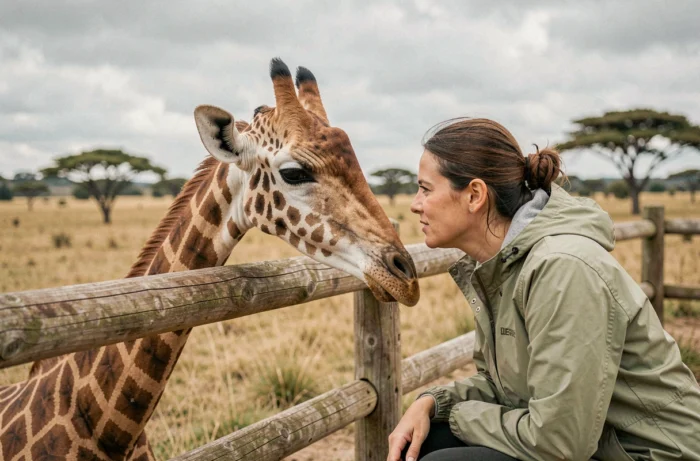
At Parc Zoo du Reynou, near Limoges, lodges are set up directly in the middle of the habitats. From the terrace, families can observe giraffes and wolves without the crowd of a typical visit. Extended observation allows for a better understanding of the animals’ natural behaviors, which a few hours’ visit does not permit.
Other parks offer similar packages. The Zoo de La Flèche popularized the concept in France with its cabins overlooking the bear or wolf enclosures. For children, the effect is significant: seeing an animal fall asleep and then wake up creates a different bond than simply observing behind glass.
What to Check Before Booking a Lodge
- The minimum age requirement varies by park; some lodges do not accept young children for safety reasons related to the proximity of the enclosures
- The duration of the stay generally includes access to the park over two days, which justifies the higher price compared to a simple ticket
- Availability goes quickly during school holidays, so booking several months in advance is often necessary
Car Safari or Walking Tour: Which Zoo Format to Choose with Children
You may have noticed that young children tire quickly on foot, while teenagers get bored in a slowly moving car? The format of the visit affects the enjoyment of the whole family.
The African Reserve of Sigean combines both approaches. The first part is traveled by car through vast plains where lions, rhinoceroses, and elephants coexist. The second part is done on foot, in more confined spaces with close observation points. This dual format adapts well to families with children of different ages.
The Safari de Peaugres operates on a similar principle, with a car circuit followed by a walking path. The immersion in a vehicle is very appealing to younger children, who experience it as an adventure.
For families who prefer walking, parks like Sainte-Croix in Moselle offer marked trails through semi-natural areas. European animals (deer, bears, lynx) roam in large spaces where you sometimes have to wait to catch a glimpse of them. It’s less spectacular, but closer to observation in a natural environment.
Animal Welfare and Regulation: What the Law Changes for French Zoos
French regulations impose profound transformations on zoological parks. The conditions of captivity and the size of enclosures are now more strictly regulated, prompting some establishments to completely rethink their layout.
For families, this evolution translates into visits that are different from what we knew ten years ago. Concrete enclosures are disappearing in favor of landscaped habitats. Animals are less visible at certain times because they have retreat areas that the public cannot access.
What This Means for Your Visit
- Plan for more time on site, as the spaces are larger and the paths longer than before
- Be prepared not to see all the animals, as some remain in their resting areas depending on the time of day
- Favor parks that clearly display their commitments and explain their layout choices to visitors
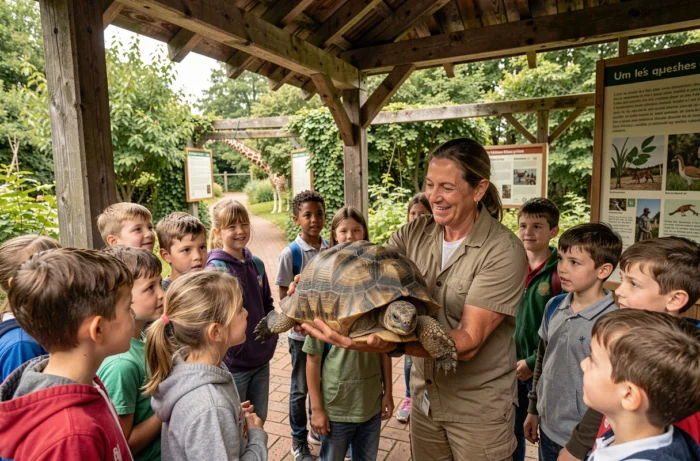
- Enjoy educational activities led by keepers, which are gradually replacing traditional shows
A zoo that limits direct contact between visitors and animals does not offer a degraded experience. This is often a sign of a park that places animal welfare at the center of its operations. Children learn that patient observation is more valuable than forced proximity.
Choosing a zoo for a family outing should go beyond just a simple list of species presented. A park committed to conservation, offering a visit format suited to your children’s ages and respecting the natural rhythms of the animals, will leave a much more lasting memory than a catalog of lined-up enclosures.