
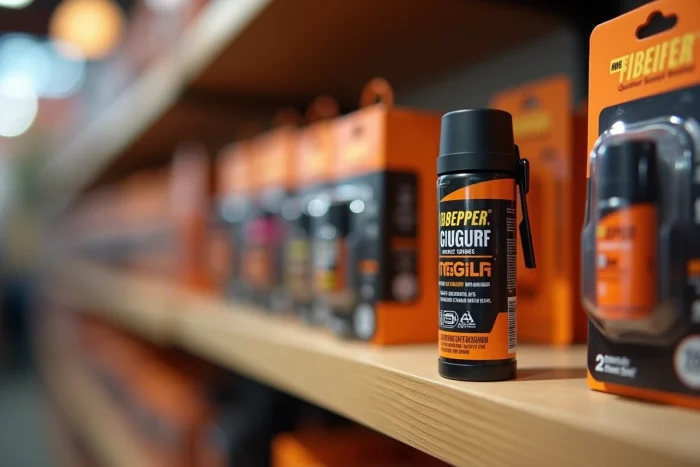
The pepper spray sold as an anti-aggression product at Decathlon regularly raises questions about its legality and conditions of use. This type of defense aerosol relies on an irritating active ingredient, oleoresin capsicum (OC), which causes intense irritation of the eyes and respiratory tract upon contact. Before considering the purchase or carrying of such a device, the regulatory classification of the product determines everything that is allowed or not.
Availability at Decathlon: a catalog that varies by channels
A rarely discussed point concerns the gap between what is found in Decathlon stores and what appears on the online site. The exact name of the product, its positioning as an “anti-aggression” spray, and its availability change depending on the country, time period, and sales channel.
Further reading : Everything You Need to Know About Newsyoung's New Address and Latest News
Some references appear temporarily on the site and then disappear from the catalog, while others remain accessible only in physical stores. This instability complicates the task for buyers specifically looking for a Decathlon anti-aggression pepper spray complete guide with specific characteristics. Checking the product sheet at the time of purchase remains the only reliable method to confirm the classification and composition of the offered spray.
Read also : Everything You Need to Know About Blood Phenotype Definition and Its Main Characteristics
Classification category D: what the law allows and prohibits
In France, defense aerosols fall under the category D of weapons when they meet certain criteria regarding capacity and composition. This classification conditions all rights and restrictions related to the product.
Purchase and possession at home
The purchase of a pepper spray classified in category D is allowed for any adult. Possession at home does not require any declaration or special authorization. The product can be kept at home just like any other domestic security device.
Carrying and transporting outside the home
Carrying a pepper spray outside the home is prohibited without a legitimate reason. This distinction between possession and carrying constitutes the main legal trap. A perfectly legal purchase in a store does not grant the right to slip the spray into one’s pocket to go out in the city or go hiking.
The legitimate reason is not defined by a closed list in the texts. It is assessed on a case-by-case basis, which leaves room for interpretation by law enforcement during a check. Transporting the product in a closed bag, separated from any immediate access, may constitute a favorable element for the carrier, but does not guarantee anything legally.
Self-defense: the strict conditions for using pepper spray
The use of a tear gas canister or pepper spray is legally justified only within the framework of self-defense. Three criteria must be met simultaneously:
- The threat must be real, current, and unjustified (not just a verbal dispute or a hypothetical risk)
- The response must be proportionate to the aggression suffered or imminent
- The use of the spray must be the last resort, after escape or de-escalation have proven impossible
Using a defense aerosol outside of these conditions exposes one to prosecution for voluntary violence with a weapon. The fact that the product is sold freely does not constitute a mitigating circumstance in court.

OC pepper spray or CS gas: choose according to the context of use
Two families of active ingredients dominate the market for defense aerosols. Understanding their differences guides the choice of the product suitable for a given situation.
The OC pepper spray (oleoresin capsicum) acts by direct contact with mucous membranes. It causes a reflex closure of the eyelids, a burning sensation on the skin, and immediate respiratory discomfort. Its effectiveness is generally observed even on individuals under the influence of substances.
The CS gas (orthochlorobenzylidene malonitrile) is a synthetic irritant that primarily affects the eyes and respiratory tract. It disperses more in the air, making it more sensitive to wind and less suitable for confined spaces.
- Indoors or in a small space, OC pepper gel limits dispersion and reduces the risk of contaminating the user
- Outdoors with wind, CS gas can backfire on the user
- For defense against dogs during running or hiking, OC spray in a stream is often preferred for its directional range
Evolving regulation: why a static guide is not enough
The classification of weapons in France evolves with laws and decrees. A product classified in category D today may see its conditions of sale or carrying modified by a new regulatory text. The pages of retailers like Decathlon do not always update their legal mentions in real-time.
Before any purchase, checking the exact classification stated on the product packaging remains the basic precaution. The mention “category D” must appear on the packaging to confirm the legal status of the spray. In the absence of this information, the product may fall under a more restrictive category, with declaration obligations or a complete prohibition for individuals.
The legal framework for the anti-aggression pepper spray hinges on a clear dividing line: purchase and possession at home are accessible to adults, while carrying outside is not without justification. This distinction, often misunderstood, transforms a domestic security object into a potential offense as soon as it leaves the home without a valid reason.