
Prediction algorithms continue to push the boundaries established just two years ago. Compatibility standards between competing devices, long deemed irreconcilable, are undergoing an unexpected rapprochement, driven by the growing demand for interoperability. Already, the prototypes unveiled at the beginning of the year showcase record miniaturization and machine learning capabilities previously reserved for the military sector.
As we approach 2026, several industrial consortiums are announcing unprecedented alliances to accelerate the market launch of connected systems that integrate cybersecurity from the design stage. Initial feedback shows a direct impact on remote health management, autonomous mobility, and energy optimization.
CES 2026: What Major Announcements Reveal About the Future of Tech
The CES 2026 in Las Vegas has shattered industry habits. Amidst neon lights and spectacular demos, tech giants like Samsung, LG, HP, and Lenovo have unveiled a wave of products that blur the lines between artificial intelligence, robotics, and connected objects. On the stage of the Innovation Awards, multifunctional robots promise to assist with domestic life, while connected health makes its way into everyday accessories, thanks to almost invisible sensors integrated into watches and clothing.
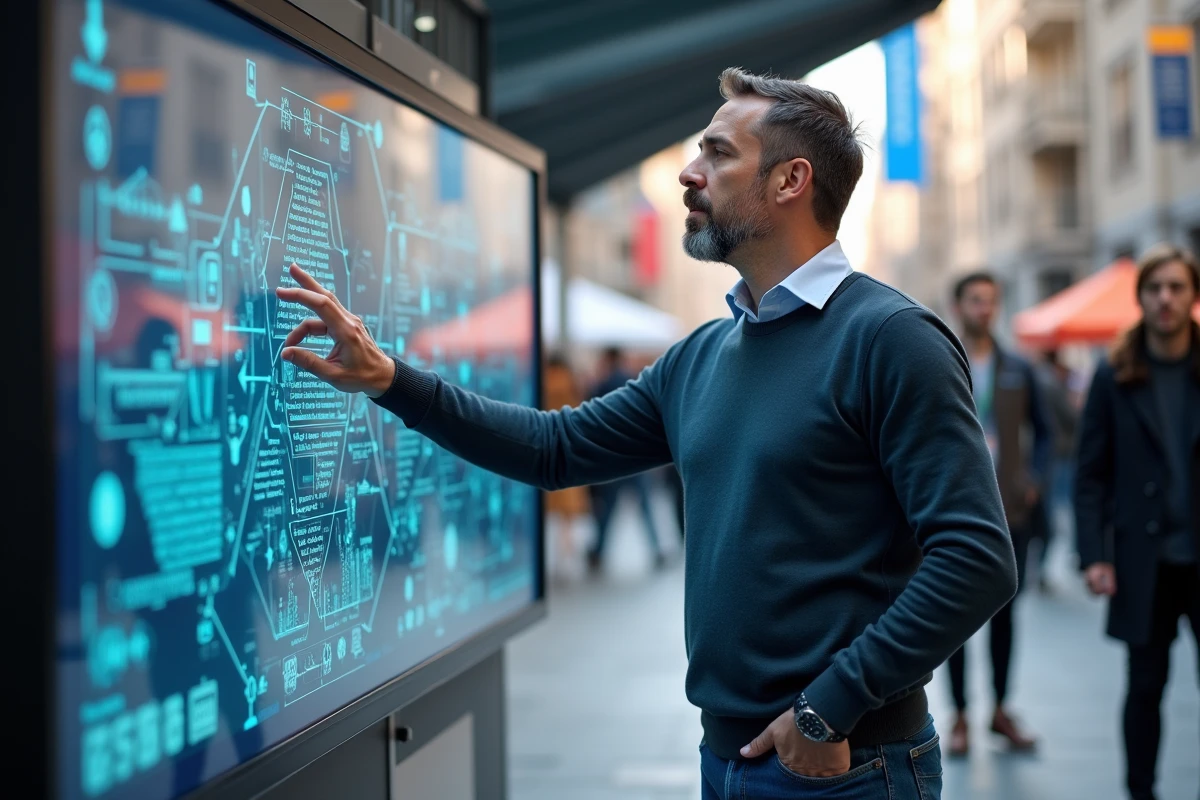
A quick visit to the tech section of Buzz du moment highlights the upheaval taking place. Observers are focusing on the arrival of ultra-fast batteries, the breakthrough of flexible screens, and the extreme reduction of smart home devices. Lenovo, for instance, has introduced holographic touch interfaces that could redefine how we interact with our environment, whether at home or in the office. LG, on its part, is investing in connected health with physiological monitoring tools designed to anticipate user needs.
Robots are now learning through their usage and adapting to family or professional habits. Autonomy is no longer an abstract concept: it is experienced, tested, and invited into private spheres. The collaboration between technologies, software, and design is intensifying, paving the way for unprecedented uses in mobility, health, and habitat management. CES 2026, through the variety and maturity of prototypes, offers a concrete glimpse of high-tech as it will assert itself in our lives tomorrow.
What Technological Trends Will Shape 2026 and Disrupt Our Practices?
The year 2026 is shaping up to be a decisive milestone for smart technologies. Artificial intelligence is no longer confined to a few niche applications: it is slipping into everyday objects, anticipating, learning, and optimizing. Embedded systems communicate, orchestrate home security, and manage energy consumption without human intervention. Digital technology is infiltrating all spaces, pushing the boundaries of automation and personalization further each week.
Digital health is particularly capturing attention. Biometric sensors, real-time monitoring tools, and platforms capable of analyzing unprecedented volumes of medical data are flourishing. Users benefit from continuous monitoring, from prevention to precise treatment management. This new landscape is accompanied by a lively debate around privacy and the management of personal data, a topic that is becoming central in all public discussions.
Augmented and virtual reality are changing the way we learn, train, and entertain ourselves. Immersion is becoming the norm, profoundly altering our relationship with content, fostering remote collaboration, and reinventing access to culture and information. The IoT continues to weave its web, connecting homes, transportation, and public spaces. Thanks to 5G and edge computing, digital exchanges are gaining speed and fluidity, opening the door to uses we could not have imagined not long ago.
In this excitement, the tech section of Buzz du moment analyzes weak signals, dissecting the ongoing disruptions. The year 2026 will see interconnection expand on a large scale, requiring new balances between advancements and data management.
From Healthcare to Mobility: How These Innovations Will Transform Our Daily Lives
Digital health is now a part of the daily lives of patients and caregivers. Thanks to smart sensors, continuous data collection becomes a reflex, enabling unprecedented remote monitoring. Mobile applications no longer just remind users of appointments: they anticipate risky situations, refine treatments, and adjust protocols as the patient evolves. In clinical trials, digital platforms shorten timelines, enhance analysis reliability, and facilitate obtaining approvals.
In practical terms, these innovations translate into connected objects that monitor health without being intrusive. A smart watch detects a heart issue, and a discreet reminder signals medication intake. Virtual reality glasses bring a new dimension to rehabilitation, creating tailored environments that encourage progress and enhance adherence to care.
Urban mobility is also benefiting from this wave of technological innovations: vehicles capable of driving themselves, optimized traffic management, and real-time adjusted routes thanks to predictive analysis. Embedded sensors help smooth travel, limit carbon footprints, and improve safety for all.
To illustrate these changes, here are some areas where the impact is already palpable:
- Connected health: from early diagnosis to personalized prevention.
- Smart mobility: optimized traffic flow, enhanced safety.
- Immersive applications: from medical training to assistance in disability situations.
France, determined to stay in the race, is accelerating the adoption of these solutions. But in this movement, one question remains on everyone’s lips: how far are we willing to entrust our data to gain comfort and security?