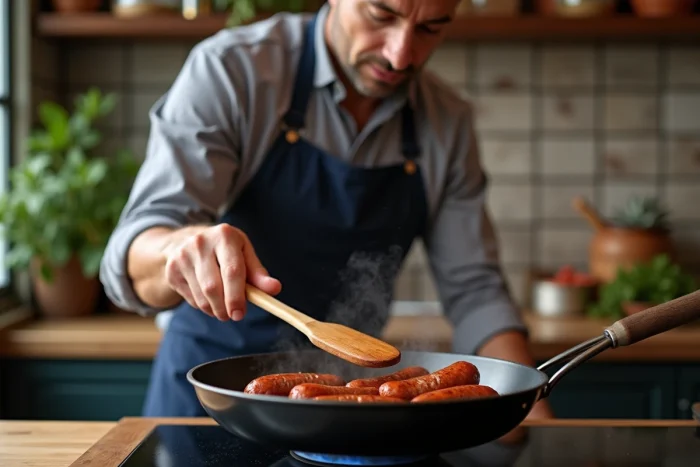
A fire that’s too hot doesn’t always make the merguez tender. This is a paradox that still escapes many enthusiasts: searing at all costs sometimes misses the mark. The pan, so convenient, holds many traps for those dreaming of juicy sausages.
Why merguez dries out in the pan: understanding the cooking traps
The merguez, essential on festive tables and in everyday plates, owes its character to the subtle blend of beef, lamb, and a clever mix of spices. However, this little masterpiece does not forgive improvisation: mishandled in the pan, it quickly loses its splendor. The explanation is simple: excessive heat melts the fat, which escapes, taking all the tenderness with it. The casing, often natural, is not invincible. A simple cut, a careless prick, and the balance is broken: the juice escapes, and the meat dries out.
Avoid piercing the merguez before or during cooking. This is the rule from professionals like Norbert Tarayre. This habit, inherited from barbecues, ruins the promise of a tasty bite. The natural casing is not just for show: it protects the flavors, retains steam, and preserves moisture. Piercing it is to ruin everything.
Choosing the right temperature changes everything. A fire that’s too strong burns the skin and leaves the inside raw. A fire that’s too gentle lets the merguez cook in its fat without forming any crust. To reheat and cook merguez in the pan without sacrificing tenderness, one must stay attentive: adjust the heat, turn frequently, monitor the color. This vigilance, much more than ready-made recipes, transforms the experience. The most reliable methods rely on managing the fire, preserving the casing, and having the patience to reach the ideal internal temperature of 75 °C, without ever sacrificing juiciness.
How to successfully cook merguez in the pan without losing their tenderness?
Before starting, let the merguez come to room temperature for a few minutes. This simple gesture prevents the muscle from contracting due to thermal shock, which would expel the juice. To begin, place the merguez in a cold or just warm pan, without adding fat: they release enough on their own to prevent sticking.
Don’t give in to the temptation to poke the sausages. The natural casing, once again, locks in the aromas and keeps all the flavor at the core. For cooking, prefer moderate heat. The temperature rise should be gradual; there’s no need to rush things. Turn the merguez every two to three minutes, no more, no less, to achieve even cooking and nice coloring while avoiding drying out.
The internal temperature remains the best indicator: aiming for 75 °C at the core ensures a cooked but still juicy merguez. A kitchen thermometer can be helpful, especially if you’re not used to it. For standard sizes, count between 10 and 12 minutes. If you prefer precision, cover the pan for one to two minutes at the end of cooking: this helps the heat penetrate without damaging the outer crust.
In this approach, nothing is left to chance. Precise turning, careful fire management, and respect for the natural casing yield a golden merguez full of character, where juiciness is never sacrificed.

Secrets and tips for reheating merguez while preserving their flavor and juiciness
Reheating already cooked merguez without losing their tenderness requires skill and rigor. Excessive heat, whether in the pan or the oven, tightens the meat and irreparably dries out the casing, jeopardizing the texture and aromatic depth.
In the pan, start by placing the merguez in a barely warm utensil. Add a tablespoon of water or a bit of broth before covering. This gesture creates steam, which prevents the sausage from drying out. Two to three minutes per side is enough to awaken the flavors. Never pierce the casing, not even during simple reheating: that’s where the spices and all the juice, precious for tasting, are concentrated.
To reheat a large quantity, oven cooking offers a popular alternative. Wrap the merguez in aluminum foil, add a splash of water, then place them in the oven at 120 °C for ten to fifteen minutes. This process ensures a rise in temperature while preserving moisture. Another solution is the double boiler: place the merguez in a closed dish, set on a pot of simmering water. A few minutes are enough to regain a tender texture, even after refrigeration.
These techniques, simple yet thoughtful, respect the nature of the product. They allow for the preservation of the spice power, the creaminess of the meat, and the promise of a merguez true to its origins. Ultimately, a well-treated merguez in the pan or during reheating guarantees an intact pleasure, ready to elevate any meal.